
AI Betting Predictions 2026 — A Punter's Guide To Forecasts, Margin And The Bookmakers Behind Them
 Available in US
A prediction in sports betting is a forecast about the outcome of an event before the market has been set or has had time to settle on a price. Behind any forecast sits a stack of inputs: recent form, head-to-head records, line-ups, injury news, expected-goals data and the price the rest of the market has already settled on. An AI betting prediction is the same forecast built by software rather than by a tipster — a model that scores historical data and weights it against current conditions, then spits out a probability per outcome. The job of this guide is to set out what such a model really does, what it costs the punter to act on, and where the line sits between a useful forecast and a marketing line dressed up as one. No picks are named on this page and no win is promised. Two things, in that order, frame every section that follows: the bookmaker’s margin sits inside every price, and no forecast — human, statistical or algorithmic — turns a losing position into a winning one.

26 October 2026 — figures and licence statuses in this guide were cross-checked against the Gambling Commission’s public register on the date of publication.
Safer Gambling And The Line That Holds Every Other Section Together
Every forecast on this page leads somewhere uncomfortable. The market the AI scores is one a person can lose money on, often quickly and usually without noticing how the loss builds. The cleaner reading of any “AI picks” page starts at the safer-gambling tools, not at the picks, and the rest of the guide works down from there.

A punter in Great Britain can call three numbers in a quiet moment and none of them are the bookmaker’s. GamCare runs the National Gambling Helpline on 0808 8020 133, twenty-four hours a day, and Gamblers Anonymous runs meetings across the country for people who would rather talk in person. The NHS funds specialist gambling clinics for severe cases and a GP can refer. GambleAware covers the cost of all of this out of operator contributions, so the help is free at the point of use.
The bookmakers reviewed below are members of GAMSTOP, a multi-operator self-exclusion scheme every online operator in Great Britain is required to join. Once registered, the person’s details are blocked across every participating site and app at sign-in. Periods run six months, one year, five years, or five years with auto-renewal, and after the minimum period the exclusion stays in place for a further seven years unless the customer asks GAMSTOP to remove it. That gives the room that has to exist between a forecast and a stake — if someone has already lost enough to want it, the system stops more bets without a customer service call.
Two regulation-grade checks bite at the bookmaker end. A financial vulnerability check applies to licensed remote betting when the customer’s deposits minus withdrawals exceed £150 in a rolling 30 days: this is a public-record check (bankruptcy, county court judgments), not an income check and not a credit reference check. Deposit limits under the Remote Technical Standards reached their first phase on 31 October 2025, a second phase was postponed to 30 September 2026, so whether the second stage is live when this is read needs to be checked against the operator’s own settings. Neither check changes the maths of a bet; both change who has to ask before the bet is placed.
The minimum age is 18. Identity, address and date of birth are verified before a first deposit — including before a free bet or bonus can be claimed — so anonymous play at a licensed site has not existed since May 2019. That cuts out a profile of recreational betting a generation ago and it is what makes licensed play traceable to a person. Anyone who finds the verification a reason to look offshore has just lost the protections this section sets out — see the legality section below.
A note on what this guide will not do. It will not produce picks, will not name winners, will not be a system that wins. Every forecast is a probability, not a fact, and the price the model says is fair is the price the rest of the market has to beat on average. The arithmetic in a later section shows the second number in the pair.
Mobile And App — Where The Prediction Lands, Where The Bet Gets Placed
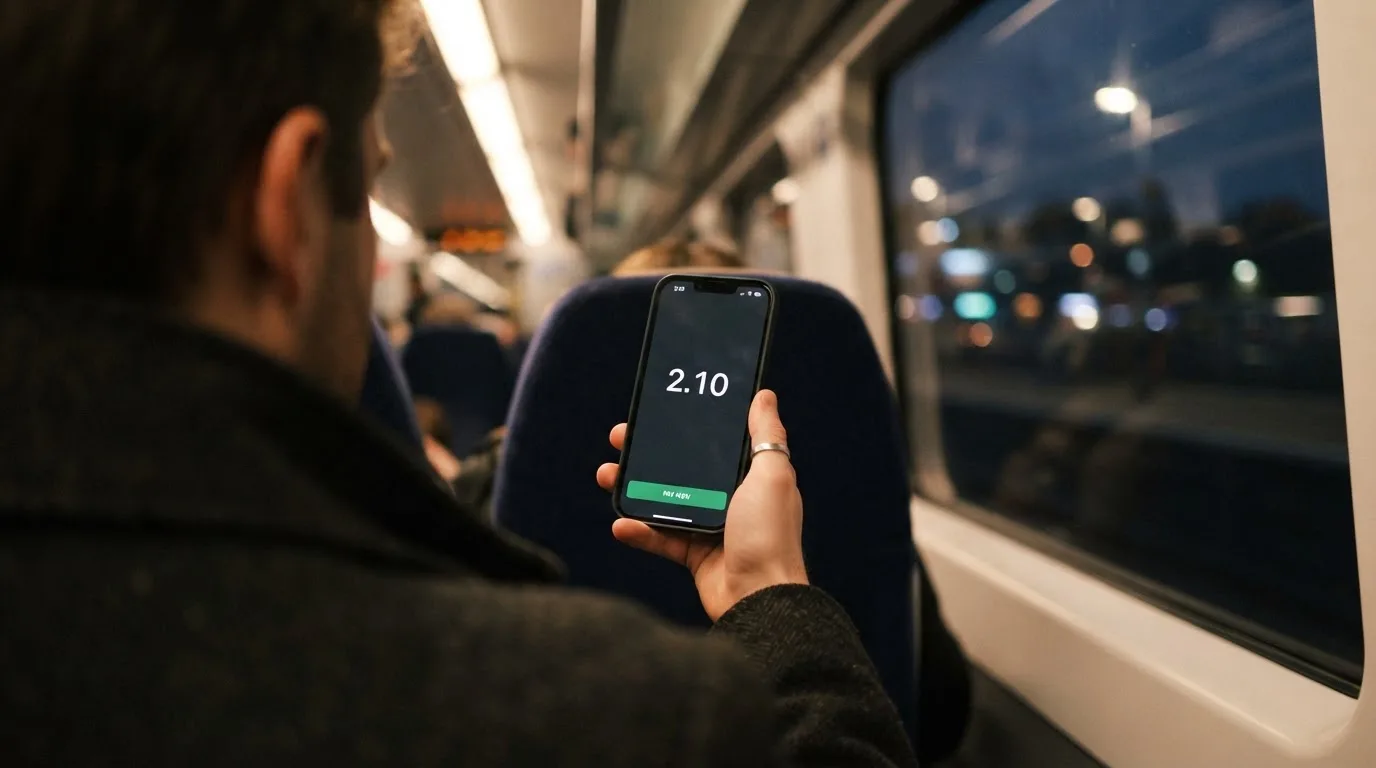
The phone in a punter’s pocket is the second stage of this whole subject. A model can produce a probability on a desktop, on a server or in another country; the bet still lands on the device, in the app or mobile site of a brand with the licence to take it. So a quick honest look at what AI betting looks like on the device:

- Native sportsbook apps — William Hill, bet365, Betway, Paddy Power, Sky Bet, BetVictor, Coral and the rest of the licensed set run full-featured iPhone and Android apps, with sign-in, deposit, bet placement and live markets. Bet Track, Match Live and Live Golf Tracker are the names bet365 attaches to the in-play tracking layer. Paddy Power’s app stacks Bet Builder+, Popular Bet Builders, Super Sub (a bet that rolls over to the replacement if a selected player is substituted), expanded Win More markets and player and ACCA stats.
- AI assistants inside the sportsbook — Unibet’s acca builder, Coral’s Odds Booster and Betfair’s Bet Finder live inside the betting app and use software to surface prices the user is more likely to want. They sit close to the AI betting predictions this guide is about, and the difference is mostly that the model outputs a bet rather than a price.
- Prediction and tipster apps — there is a parallel set of products that score fixtures and show picks without ever taking a bet. These are not bookmakers and do not need a Gambling Commission licence to display a probability. The licence is needed for the bet; the app a customer sees the forecast on is a separate question. A punt made on a brand without a GB licence is dealt with in the legality section below.
- The browser on the phone — every site in the shortlist renders on mobile Safari and Chrome and accepts deposits and bets there. A customer who dislikes apps can stay on the browser and lose nothing of substance except push notifications.
Most users move between two or three of these layers in a single session. A model on a third-party app suggests a price, the punter opens the bookmaker app and looks at the actual line, then either places the bet or walks away. The licence question that matters is the brand that takes the bet, not the brand that drew the line — and the licence register below is where to check that.
The other reason the phone is the centre of this subject is the live market. In-play betting was the first feature that needed an app, then became the feature an app has to have. bet365’s description of its own product puts in-play betting and live streaming at the front of the offering, with Bet Track and the Live Golf Tracker alongside. Coral offers Best Odds Guaranteed from 8am each morning on all UK and Irish horse racing and every UK greyhound race, plus Bet In-Race betting and cash out during races. William Hill’s WHTV streaming requires a funded account or a bet in the last 24 hours, and live racing requires a bet of £1 or more on a qualifying race; Betting TV shows selected UK and US horse racing and UK greyhounds free. These are all features a phone is built to consume.
Predictions, Strategy And The Math Of A Bet
This section does the work that no tip sheet can do for a reader: it walks through how a forecast is actually built, what a value bet is, what the bookmaker’s margin does to the line, and how a stake turns into a return. The arithmetic is finished work, not a teaser.
How An AI Prediction Is Built
A model that scores a football match reads recent form, expected-goals (xG) data, head-to-head records, line-ups, league position and the price the rest of the market has already settled on. A model that scores a horse race reads past ratings, going, distance, course and the market’s own book. The differences are the inputs; the output is always the same shape — a probability per outcome, written either as a decimal (Manchester City to win: 0.58) or as an implied price (1 / 0.58 ≈ 1.72).
Three points rarely come with the forecast and almost always matter:

- The bookmaker’s margin is in the price. A two-way market priced 1.90 / 1.90 is not 50/50. The implied probabilities are 1 / 1.90 = 0.526 each, which sum to 1.053, and the 0.053 above 1 is the margin — the slice of every pound the bookmaker takes as profit. The model has to beat the line, not the underlying event.
- Form and line-up data is updated late. A starting XI confirmed an hour before kick-off can swing a price; a model trained on a pre-line-up snapshot will under-react unless its data feed is current.
- A probability is not a tip. A 60% probability on a coin-toss loses four times in ten. The arithmetic below shows why staking matters more than picking.
Value Bets: When The Forecast Beats The Line
A value bet exists when the model’s probability is higher than the implied probability in the price. Manchester City to win at 1.72 implies a 0.5816 chance of happening; if the model says 0.60, there is edge on the price, and a stake makes sense. If the model says 0.55, the price is wrong for the model and the stake does not make sense. The work is comparing two probabilities, not picking a winner.

The maths in the worked example below uses an illustrative two-way market at 1.90 / 1.90 — an example, not a quoted price.
The Margin In A Two-Way Market
Implied probability of home win = 1 / 1.90 = 0.5263
Implied probability of away win = 1 / 1.90 = 0.5263
Sum = 1.0526
Payout share per pound staked (for the winning outcome) = 1 / 1.0526 = 0.9500
Margin (the slice the bookmaker keeps of every unit bet) = 1 − 0.9500 = 0.0500, or about 5 %.
Stated as a band rather than a single point: a typical two-way market priced near 1.90 / 1.90 carries a margin in the 4.8 % to 5.3 % band, depending on the bookmaker’s market and the liquidity of the event — so roughly 5p in every pound staked going to the bookmaker on this kind of market, before any outcome is even settled. Three-way markets (home / draw / away) and exotic markets run wider.
The implication for a forecast: a model with an edge of 5% on its true probability is, in round terms, just beating the margin on an average event, and a larger edge is what makes the bet worth placing over a long run.
Stake, Odds, Return: A Worked Example
For a single bet of £10 at decimal odds of 3.00 (2/1 fractional):
Return on a win = stake × odds = 10 × 3.00 = £30
Net profit on a win = stake × (odds − 1) = 10 × 2.00 = £20
Net loss on any other outcome = stake, so −£10.
For a combination (accumulator) bet the odds of each leg multiply into one combined price. A treble of £5 at 2.50, 3.00 and 2.00 returns £5 × 2.50 × 3.00 × 2.00 = £75 on a win (net profit £70) and loses the £5 stake if any leg fails. The wider the price, the larger the multiplier, and the more likely one of the legs fails.
Why No Tip Is Ever Certain
Even a 90 %-probability event fails one time in ten. A real sample of 200 bets at the same decimal price (and at the same stake) lands within a band wide enough that a “winning tipster” can be a statistical artefact for stretches of a season and a losing one the season after. Bankroll discipline is the practice of sizing stakes so that even an unlucky run does not break the bank. The forecast is the input; the staking is the skill.
Staking Without Burning The Bank
Three rules a working punter follows in any month:
- Stake a fixed small percentage of the bank — 1 % to 3 % is the common band. A £500 bank at 2 % means a stake of £10. The same £10 stake against a £100 bank is 10 %, well above any sensible bracket, and the recommended reading is that the deposit that built the £100 bank was already too large for what was staked.
- Keep the price above the minimum — most bookmakers require a minimum price (often 1.50 or 2.00) on a qualifying bet and on legs of accumulators when a promotion is involved. Below the minimum the bet counts nothing; above it, the bet counts in full.
- Log bets and review the bank monthly — a bet that is not logged is a bet that never becomes data. A simple spreadsheet of date, event, price, stake, outcome and running bank is what most working bettors use. The model cannot learn from a bettor that does not.
The forecasting tool helps with steps one and three; nothing in this guide substitutes for steps one and three being done.
The UK Shortlist Of Reviewed Bookmakers
The ten operators below all hold a Gambling Commission remote licence for real-event betting and are listed on the Commission’s public register. They are not a ranking: a place in this shortlist is not a recommendation and is not “the only” licence held. Each operator is described in the operator’s own terms, and each ends on a verdict. Where the same licensee runs more than one brand — Ladbrokes and Coral under Entain, Paddy Power and Betfair under Flutter, BetVictor and talkSPORT BET under the same group — the review covers one brand only and notes the other where it has a product feature that matters here.

BetGoodwin — Best Odds Guaranteed For Racing Fans
- Licence: Gambling Commission remote licence 002927-R-327985-008, account 2927; licence holder Goodwin Racing Limited. Licence type: Remote general betting (real events).
- What the operator’s terms say on this guide’s subject: BetGoodwin pays Best Odds Guaranteed on all UK and Irish horse and greyhound racing, up to £1,000.
The horse-racing offering is the main draw. Best Odds Guaranteed up to £1,000 is higher than most rivals, and combined with a focused racing book it makes BetGoodwin the right address for a punter whose weekly stake sits on a couple of cards. Out of racing the sportsbook is narrower than the high-street names. For an AI prediction on a match the book is thinner and the prices less competitive than the established bookmakers below. Verdict: for the racing-only punter this is one of the more generous terms on the GB market; for everything else, look further down the list.
Betway — Established Sportsbook With A Welcome Package Stipulation
- Licence: Gambling Commission remote licence 039372-R-319367-029, account 39372; licence holder Betway Limited. Licence type: Remote general betting (real events).
- What the operator’s terms say on this guide’s subject: Betway’s welcome offer for new UK and Ireland customers is £40 in free bet tokens (4 × £10) credited on settlement of a first bet of at least £10 at minimum odds of 2.0, with a 7-day expiry and debit card deposits only.
Betway’s strengths are its broad sportsbook, strong in-play product and a stable mobile experience. The welcome offer is conventional for the market — £10 trigger at 2.0 minimum, four £10 free bet tokens, seven days to use, debit card deposits only (credit cards are banned for gambling in GB in any case). The 2.00 minimum price is the standard line for “qualifying bet”; a bettor who wants to place a low-odds “banker” does not qualify. Verdict: a mainstream choice for a punter who wants the full sportsbook and would rather have £40 in four tokens than a single bundle; the debit-card restriction rules out a small slice of bank-paying customers for the trigger bet.
bet365 — The In-Play Reference Brand
- Licence: Gambling Commission remote licence 055148-R-331498-002, account 55148; licence holder Hillside (UK Sports) ENC. Licence type: Remote general betting (real events).
- What the operator’s terms say on this guide’s subject: bet365 offers in-play betting and live streaming of events worldwide, plus Bet Track, Match Live and a Live Golf Tracker for following bets in play.
bet365 is the reference brand for in-play betting and live streaming. Bet Track, Match Live and Live Golf Tracker are the names for the visualisations on top of live events, and the live streaming catalogue is broader than any other GB-licensed sportsbook. For an AI forecast on an in-play market the deeper in-play product is exactly what an edge looks like — there are more markets, more in-play price movement and more opportunities to back or lay against the model’s line. Verdict: the right address for a punter who treats in-play as the primary product; the depth is the selling point and the depth also makes the brand harder for a beginner to read.
William Hill — BOG For UK And Irish Racing From 8 AM
- Licence: Gambling Commission remote licence 039225-R-319373-015, account 39225; licence holder WHG (International) Limited. Licence type: Remote general betting (real events).
- Operator terms: William Hill pays Best Odds Guaranteed on UK and Irish horse racing from 8 AM on the day of the race, for both single and multiple bets; it does not apply to ante-post, tote or pari-mutuel bets. WHTV streaming requires a funded account or a bet in the last 24 hours, with £1 minimum on a qualifying race for live racing; Betting TV shows selected UK and US horse racing and UK greyhounds free.
William Hill’s horse-racing product is the deepest on the GB market alongside bet365, with Best Odds Guaranteed from 8 AM as the headline. The streaming terms are the practical reading: a £1 qualifying bet on the race is enough; the free-to-air racing on Betting TV fills the rest of the day. Verdict: the right choice for a punter whose forecast model works best on UK and Irish racing, where the BOG and streaming make the difference between a small edge and a real one; ante-post and tote bettors get nothing from BOG and should look elsewhere.
Lottoland — A Lottery-Led Brand Crossing Into Sports
- Licence: Gambling Commission remote licence 038991-R-319408-020, account 38991; licence holder EU Lotto Limited. Licence type: Remote general betting (real events).
- Operator terms: Lottoland UK’s app combines casino, lottery betting, sports betting and scratchcards, and it states it is licensed by the Gambling Commission for customers in Great Britain.
Lottoland built its name on lottery betting and has broadened into casino, scratchcards and a sports betting vertical. The sports book is narrower than the dedicated brands and the depth of in-play markets is a step or two behind. For an AI forecast the niche of lottery-style bets (set draws, jackpot outcomes) is unusual and the lottery vertical carries its own quirks. Verdict: a reasonable secondary book for a punter who plays the lottery and wants everything in one wallet, but not a primary sportsbook for a serious model.
VBet — Football, Bet Builder And Live Streaming
- Licence: Gambling Commission remote licence 044662-R-324273-022, account 44662; licence holder SCGO Limited. Categories: remote general betting standard (real events).
- Operator terms: the Vbet app offers Bet Builder, pre-match and in-play betting, live streaming and a live calendar with results and stats.
VBet concentrates on football with Bet Builder and live streaming at the front, plus a live calendar that helps a punter find fixtures and follow in-play events. For an AI forecast on a football match the Bet Builder product lets the punter assemble same-game multiples from the model’s per-player probabilities. Verdict: a strong football-focused sportsbook with Bet Builder as the headlining edge; less of a destination for racing or a tennis model.
Midnite — Modern Sportsbook, Acca Builder And Price Boosts
- Licence: Gambling Commission remote licence 101839-R-342850-001, account 101839; licence holder Midnite Limited. Categories: remote general betting standard (real events).
- Operator terms: Midnite’s site cites Gambling Commission licence 101839 and shows in-play events, an acca builder, popular accas and price boosts with maximum-stake limits. Midnite’s sports welcome offer: new customers who bet £5 or more on pre-match odds of EVS (2.0) or greater within 14 days of sign-up receive £25 in free bets and 50 free spins, valid for 7 days.
Midnite is one of the more recent GB-licensed sportsbooks and stacks the standard in-play, acca builder and price boosts with the standard caveats (maximum-stake limits on boosted prices). The free-bet cluster sits alongside the welcome bet — three £10 free-bet tokens, plus 50 free spins, valid for 7 days. Verdict: a credible modern pick for a punter who wants in-play, an acca builder and a few boosted prices every day; less comprehensive than bet365 but younger in feel.
Sky Bet — The Sky-Verified Sportsbook
- Licence: Gambling Commission remote licence 067370-R-341330-005, account 67370; licence holder SBG Sports Limited. Categories: remote general betting standard (real events).
- Operator terms: Sky Bet’s welcome offer for new customers is £30 in free bets, credited as three £10 free bet tokens after a deposit of at least £5 and a first single or each-way bet of at least 5p at odds of 1/1 or greater.
Sky Bet’s sportsbook is broad and its horse-racing product is competitive without leading the field. The 5p minimum stake on the qualifying bet is an unusual detail — it is the lower bound the Gambling Commission’s promotion rules permit, designed to lower the threshold for the trigger bet. Verdict: a mainstream sportsbook with the lowest possible stake on the qualifying bet of the welcome offer; a fair match for a punter cautious about the trigger-bet size.
Tote — The Pool-Betting Specialist
- Licence: Gambling Commission remote licence 054779-R-331321-008, account 54779; licence holder TDCO Limited. Categories: remote general betting standard (real events).
- Terms: as a pool operator, Tote pays the pool’s final dividend rather than a fixed-odds price and the stake often carries a different return profile than a single fixed-odds bet.
Tote is the established pool-betting brand on British racing and is now offered online under a GB licence. Pool betting is a different product from fixed-odds betting: the dividend is the pool divided by the winners, after the operator’s take, and a model that prices horse races against the SP will face a market that works to a different number than the fixed-odds book. Verdict: the right address for a punter whose model works on pool dynamics (place terms, jackpot pools, scoops); not a substitute for a fixed-odds sportsbook and intended to complement one.
Paddy Power — Bet Builder, Super Sub And ACCA Stats
- Licence: Gambling Commission remote licence 039439-R-319330-013, account 39439; licence holder PPB Counterparty Services Limited. Categories: remote general betting standard (real events).
- Terms: Paddy Power’s app offers Bet Builder+, Popular Bet Builders, Super Sub (a bet rolls over to the replacement if a selected player is substituted), expanded Win More markets and player and ACCA stats.
Paddy Power is the high-promotion end of the Flutter pair alongside Betfair, and the product is wider than most competitors. Super Sub and Bet Builder+ are the distinctive features — a substitute is treated as a roll-over rather than a losing leg on selections that depend on the player, which is a real change for a model whose forecasts list specific players. Verdict: a bettor whose model works player-by-player (cards, shots, anytime scorers) gets the most from Super Sub and the Bet Builder+ product; for outright markets it is comparable to the high-street names.
What A Side-by-Side Reading Of The Shortlist Shows
The table below puts the licences and the operator’s headline terms beside each other so the comparison is plain. Numbers belong to each operator; cells where no feature information is available carry an em-dash and the brand is judged on its other entries.
| Brand | Gambling Commission remote licence | Licence holder | What the operator’s terms state on the subject key |
|---|---|---|---|
| BetGoodwin | 002927-R-327985-008 (account 2927) | Goodwin Racing Limited | Best Odds Guaranteed on UK and Irish horse and greyhound racing, up to £1,000 |
| Betway | 039372-R-319367-029 (account 39372) | Betway Limited | Welcome package: £40 in free bet tokens (4 × £10) on £10+ first bet at min 2.0, 7-day expiry, debit cards only |
| bet365 | 055148-R-331498-002 (account 55148) | Hillside (UK Sports) ENC | In-play betting, live streaming worldwide, Bet Track, Match Live, Live Golf Tracker |
| William Hill | 039225-R-319373-015 (account 39225) | WHG (International) Limited | Best Odds Guaranteed on UK and Irish horse racing from 8 AM on single and multiple bets; WHTV streaming (funded account or 24h bet; £1 qualifying on live racing) |
| Lottoland | 038991-R-319408-020 (account 38991) | EU Lotto Limited | Casino, lottery betting, sports betting, scratchcards combined; GB-licensed |
| VBet | 044662-R-324273-022 (account 44662) | SCGO Limited | Bet Builder, pre-match and in-play, live streaming, live calendar with results and stats |
| Midnite | 101839-R-342850-001 (account 101839) | Midnite Limited | In-play, acca builder, popular accas, price boosts with max-stake limits; welcome: £25 free bets + 50 free spins on £5+ at EVS+ pre-match, 7-day validity |
| Sky Bet | 067370-R-341330-005 (account 67370) | SBG Sports Limited | Welcome: £30 in free bets (3 × £10) on deposit of £5+ and a first single or each-way bet of at least 5p at 1/1+ |
| Tote | 054779-R-331321-008 (account 54779) | TDCO Limited | Pool betting on racing — dividend paid from the pool rather than fixed-odds price |
| Paddy Power | 039439-R-319330-013 (account 39439) | PPB Counterparty Services Limited | Bet Builder+, Popular Bet Builders, Super Sub, expanded Win More markets, player and ACCA stats |
The headline reading: six of the ten (bet365, William Hill, VBet, Midnite, Sky Bet and Paddy Power) cover mainstream football and racing; BetGoodwin and Tote are racing specialists; Lottoland is lottery-led with a sports vertical; Betway is broad and conventional. On Best Odds Guaranteed specifically, three brands — BetGoodwin, William Hill and Coral’s wider peer group — publish the term; the rest of the shortlist either does not publish it or runs it under different branding.
An Operator Against The Subject — Where The Shortlist Falls Short
The subject of this guide is AI betting predictions, and one reading should be made of the shortlist against that. None of the ten reviewed brands publishes a forecasting model as part of its sportsbook product. The market the bettor faces is the licensed bookmaker’s market, with the model’s price compared against the bookmaker’s price; the model itself lives outside the brand. So no reviewed operator, on the evidence reviewed for this guide, makes a forecast the punter can follow in-app, and the brands that do are the parallel prediction and tipster products in the mobile section above — most of which are not bookmakers and do not hold a Gambling Commission remote licence. The verdict is not a defect in any one brand; it is a feature of how the GB market is structured.
The Landscape: What AI Betting Predictions Cover And Where The Tech Goes Next
The term “AI betting” covers three product shapes that are easy to confuse:

- Forecasts and tipster apps that produce probabilities and tips without taking bets. These are the closest to “AI betting predictions” in the sense the searcher of the phrase usually means. They earn revenue from subscriptions, advertising or affiliate links and are not regulated as bookmakers.
- Bookmaker-side price-setting that uses the same statistical machinery the third-party apps use, but keeps the model inside the sportsbook. The brand gets the line first, the customer sees the line second, and a regular punter does not see a forecast as a separate product.
- In-app assistants that suggest bets, accumulators or boosted prices based on customer behaviour. Coral’s Odds Booster and Betfair’s Bet Finder are the names given to a feature that nudges the user towards existing markets rather than producing a fresh forecast.
The present of the subject, in 2026, is the third of the three — the in-app assistant. The bookmaker-side price-setting has been running for years inside the major brands’ trading floors, and the third-party forecast and tipster apps have been around since at least the mid-2010s. The future the marketing copy sometimes sketches — fully autonomous tipsters whose track records are independently verified and audited — is more distant than the marketing says. A track record cannot be audited without a stake list that the punter can verify against the betting record, and that problem is unsolved at scale.
Three caveats worth keeping on the page:
- A model’s accuracy on past fixtures is not a forecast. Training accuracy is a property of the data a model has already seen; out-of-sample accuracy is the property that matters, and most published track records do not separate the two.
- A subscription model is the product, not the picks. A forecast service that charges a monthly fee has more reason to retain the punter than to deliver picks that would resolve the relationship with a single winning month.
- No forecast “knows” the team news an hour before kick-off. A model trained on a pre-line-up snapshot will under-react unless its data feed is current, and even then substitutions, weather and referee assignment are not modelled deterministically.
The Statute, The Jurisdiction And The Licence Test
The legal frame around the shortlist is the Gambling Act 2005, the Gambling (Licensing and Advertising) Act 2014, the Licence Conditions and Codes of Practice (LCCP), the Remote Technical Standards (RTS), and the marketing codes enforced by the Advertising Standards Authority.

Who Holds A Licence
A bookmaker serving customers in Great Britain needs a Gambling Commission licence wherever it is based; the Gambling (Licensing and Advertising) Act 2014 brought this in for remote operators. A Curaçao, Maltese or Gibraltar licence does not substitute. The Commission’s public register, searchable by business name, trading name, domain or account number, is the only place that proves who holds a licence, and an entry is the only evidence worth quoting. There is no state monopoly and no cap on the number of licences; never “the only” licensed one. Multiple brands can run under a single licensee — Ladbrokes and Coral under Entain, Paddy Power and Betfair under Flutter, BetVictor and talkSPORT BET under the same group — so customer protection is licensee-level and the licence account number is the right anchor.
What May Be Bet On
No statutory list of permitted bets and markets exists. An operator holds a licence for a category (remote general betting standard real events, remote general betting standard virtual events, remote general betting limited, remote pool betting or remote betting intermediary for exchanges) and runs markets under its own rules and the LCCP. In-play betting is offered by GB bookmakers under the operator’s licence conditions and customer-protection duties and is not “unrestricted” as a legal conclusion. Esports are treated like any other event; virtual events are a separate licence category. There is no statutory cap on stakes: operators set their own maximum stakes and may restrict customers.
Bonuses And Marketing
The 10× wagering cap on bonuses came into force on 19 January 2026 — a £10 bonus at 50× needs £500 of bets, and under the cap no more than £100 of qualifying bets is required per bonus. Mixed-product promotions (an offer that requires gambling on two or more product types such as betting, casino, bingo and lottery, for example “bet on football to get free spins”) are banned under the same rule. The 10× cap applies to wagering requirements, and whether it applies to free bets with no wagering condition is not established. No cap on the money value of a bonus is in force.
Advertising goes through the CAP Code (non-broadcast) and BCAP Code (broadcast), enforced by the ASA, alongside the LCCP marketing conditions. CAP Code section 16 sets the social-responsibility test: marketing must be socially responsible, must not be of strong appeal to under-18s, and no one who is or seems to be under 25 may be featured gambling or play a significant role in an advertisement. The rule is about who may appear in the ad, not who may bet.
Tax
The player pays no tax on betting winnings in Great Britain. General Betting Duty is the operator’s tax on gross profits, currently 15 %; from 1 April 2027 a new remote betting rate of 25 % applies within it, while remote bets on UK horse racing, bets on self-service betting terminals, pool betting and in-person betting stay at 15 % (HM Government policy paper of 26 November 2025). Until 1 April 2027 the remote rate stays at 15 %. General Betting Duty is a charge on the operator, not the punter, and is not passed through the odds in any verifiable way.
Offshore And The Loss Of Protections
An offshore brand with a Curaçao, Maltese or Gibraltar licence but no GB licence is illegal to provide facilities in Great Britain under section 33 of the Gambling Act 2005 (offence on summary conviction: up to 51 weeks’ imprisonment, a fine up to level 5, or both; six months in Scotland). It is targeted at the operator; no offence aimed at a customer who merely bets on an unlicensed site was found. Honest framing of what a customer loses on an unlicensed site: no GAMSTOP coverage, no Commission complaints route, no approved dispute-resolution body, no British consumer redress if funds are withheld, not bound by the 10× bonus cap or the £150 vulnerability check. The licensed side has checks, limits, GAMSTOP and a bonus cap; the unlicensed side has none of those protections and the risk of loss of funds. Neither is “the safe choice” by default — they are different bets the punter is making with different protections and different risks.
The Practical Rule
Open the Commission’s register, search by domain, and confirm the licence account number. A brand’s own homepage can quote a licence that is not in the register; the register is the test, the homepage is marketing. The licence number and account number from the table above are the ones to type in.
What The Margin Does To A Forecast — A Numerical Reading
The arithmetic in the predictions section set out a single worked example on an illustrative two-way market at 1.90 / 1.90 (an example, not a quoted price). The band on the margin of a typical two-way market at that level is 4.8 % to 5.3 %, depending on the bookmaker’s market and the liquidity of the event — so roughly 5p in every pound staked going to the bookmaker on this kind of market, before any outcome is even settled.
The second number the punter has to beat is the model’s own variance. A 55 %-probability event priced at 1.90 is +EV (positive expected value) on the line; a 50 %-probability event at 1.90 is −EV by the margin; a 60 %-probability event at 1.90 is +EV by an additional 5 %. The bookmaker’s 5 % does not change with the punter’s confidence; it is the rent the punter pays for using the line at all.
For a three-way market (home / draw / away on football) the band widens. The market typically runs a 7 % to 12 % margin, sometimes wider at less popular fixtures. For in-play markets the band sits in a similar place for major events and widens sharply for niche markets. For accumulators every leg carries its own margin and the margin of the accumulator is at least the sum of the leg margins, often higher.
A forecast model of any sophistication needs to beat not just the underlying event but the bookmaker’s slice of the line. That is the work the predictions in the previous section describe; the licence to read the page is the licence to read the conclusion honestly. A 6 %-edge forecast over a year of betting at the modelled bankroll size has produced returns in the low-double-digit-percentage range historically, and the same model run for two years has, in published samples, spent long stretches making no money at all. The honest read of an edge of this size is that staking discipline matters more than the forecast does, and the only budget a punter should commit is one they can lose.
Comparing The Two Paths The Punter Can Take
Two paths exist for a punter who reads this guide and decides to act. The first is the licensed sportsbook path: register with a GB-licensed brand, verify identity, deposit, place a bet on the price the brand publishes, and use safer-gambling tools to set the day’s deposit limit. The second is the unlicensed or prediction-only path: use a forecast or tipster app to find a price, place the bet either through a licensed sportsbook or through an unlicensed brand, and accept that the protections on the licensed side are gone if the brand is unlicensed.
The choice between them comes down to three things. First, the licence check: the table above is built on a register check, and the search by domain at the Commission’s public register is the right starting point. Second, the stake discipline: 1 % to 3 % of the bank per bet, a fixed staking unit, a log of every bet and a monthly review. Third, the safer-gambling tools: a deposit limit set on day one, the GAMSTOP listing if gambling is starting to bite, and the National Gambling Helpline (0808 8020 133) ready in a quiet moment. The unlicensed path offers none of those — the gamble is a higher potential payout against a smaller safety net.
The Closing Reading
The bookmaker’s margin sits inside every price, the operator is licensed or it is not, and the forecast — human, statistical or AI-driven — still settles on a coin the punter has not flipped. What this guide set out to do is teach the punter to read the line, choose the brand and place the bet on a stake the bank can lose. Ten GB-licensed brands are reviewed above; the right one is the one whose product fits the forecast at hand. The forecast itself is the punter’s job.
FAQ
What Is An AI Betting Prediction?
A forecast about a sports event built by software. The model reads recent form, statistics, line-ups, injury news and the rest of the market’s price, then outputs a probability per outcome. The forecast is read against the bookmaker’s price in the betting app, not as a pick the punter lays a stake on without checking. A model is no more accurate than its inputs and data feed; training accuracy is a property of data the model has already seen and out-of-sample accuracy is the property that matters. A track record that quotes only training accuracy is overstating the case.
Is AI Sports Betting Legal In Great Britain?
A bookmaker serving customers in Great Britain needs a Gambling Commission licence wherever it is based, under the Gambling (Licensing and Advertising) Act 2014. A brand without that licence is providing facilities to GB customers in breach of section 33 of the Gambling Act 2005. A model that produces forecasts and tips without taking bets is not a bookmaker and does not need a licence to display probabilities. A subscription forecast service is the product, not the picks, and is not regulated as a bookmaker in any case. Forecasts themselves are not the regulated step; the bet is.
Can AI Really Predict Sports Outcomes?
Models score historical data and weight current conditions to produce a probability per outcome, and they do this consistently faster than a person. A probability is not a tip: a 60 %-probability event fails four times in ten, and a 90 %-probability event fails one time in ten. Stake sizing, bank discipline and the line between a value bet and a marketing line are the work the punter does. The honest answer is that models can produce forecasts with a measurable edge over random picks on certain markets and over particular windows, and the edge is often small.
What Is A Value Bet And Why Is No Tip Ever Certain?
A value bet exists when the model’s probability is higher than the implied probability in the bookmaker’s price. If Manchester City to win is priced at 1.72, that implies a 0.5816 chance of happening; a model that scores the fixture at 0.60 has found a value bet on the home side. No tip is certain because no model can fold team news an hour before kick-off or a referee’s booking pattern into the input deterministically, and because the bookmaker’s margin sits inside every published price. The bet that looks like a value at 1.72 is the same bet the rest of the market has already priced, with the same downstream distribution of outcomes.
What Is The Bookmaker’s Margin And How Is It Seen In The Odds?
The margin is the slice of every pound bet that the bookmaker keeps as profit, before outcomes are settled. A two-way market priced at 1.90 / 1.90 has implied probabilities 0.5263 + 0.5263 = 1.0526, and the 0.0526 above 1 is the margin — 5 % in this worked example. State as a band rather than a point: a typical two-way market near 1.90 / 1.90 carries a margin in the 4.8 % to 5.3 % range, depending on liquidity, with three-way football markets wider at 7 % to 12 %. A bettor who reads the odds as probabilities has already paid the margin, by definition, before staking.
Combat & motorsport – AI Betting
Content created by the «AI Betting» team
